Home Services Pillar - Data Pipeline Development - Data Migration Services - Independent Databricks Consulting - Databricks Cost Optimization - Microsoft Fabric Consulting - Corporate Databricks Training - Hire Databricks Experts Industries Pillar - Fintech - Healthcare Solutions Case Studies Remote Consulting About Cyfra Dane Blog & Insights Contact / Workload Intake
Architecture & Infrastructure

Databricks Data Engineering Consulting Services

Build Scalable, High-Performance Data Foundations

Your data platform should be an engine for growth, not a bottleneck. Cyfradane provides specialized Databricks data engineering consulting services to help enterprises design, deploy, and scale highly resilient modern data architectures. From building high-throughput ETL pipelines to deploying advanced Lakehouse architectures, we engineer the reliable infrastructure required to power your critical analytics and business intelligence initiatives.

Schedule a Data Engineering Consultation Explore Our Architecture Methodologies
Cyfradane data engineers optimizing Apache Spark clusters for high-performance ETL
Specialist Databricks Engineers
ISO Security Protocols Applied
Azure, AWS, and GCP Deployment

What is Databricks for Data Engineering?

In the enterprise data landscape, the volume, velocity, and variety of information easily overwhelm traditional processing systems. Databricks resolves this through the unified Lakehouse architecture, merging the vast, cost-effective storage capabilities of data lakes with the reliability, structure, and performance of enterprise data warehouses.

For data engineering, Databricks represents the pinnacle of scalable data processing. Built on Apache Spark, it allows engineering teams to process massive datasets rapidly through distributed computing. Through Delta Lake, it introduces ACID transactions, time travel, and robust metadata management, ensuring absolute data reliability and pipeline consistency. At Cyfradane, we leverage the Databricks platform to build automated, highly fault-tolerant data pipelines that transform disparate, messy data into structured, analytics-ready assets for the enterprise. We focus purely on engineering the most reliable foundation possible, ensuring that your subsequent downstream analytics and reporting tools operate on a single source of truth.
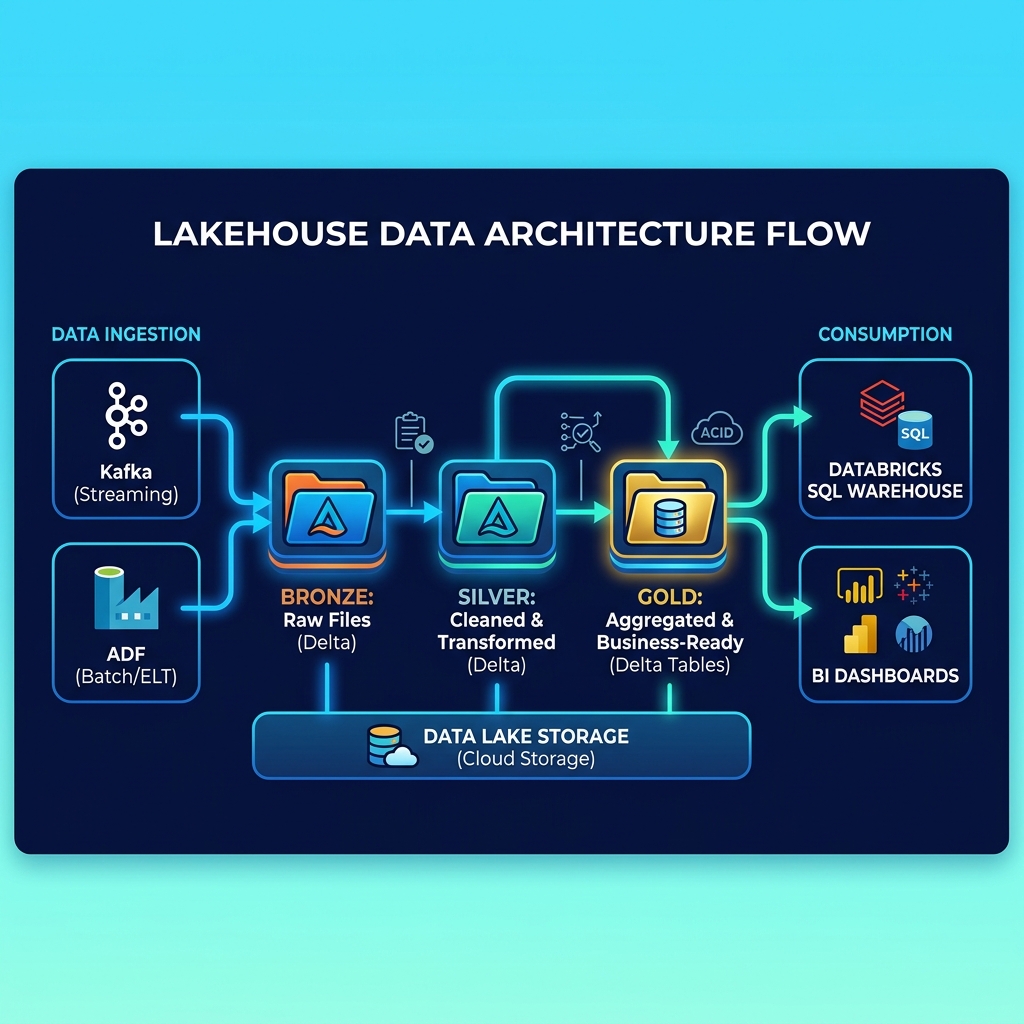
Databricks Lakehouse Architecture diagram showing enterprise data engineering flow

Business Challenges We Solve

Enterprise data infrastructure often suffers from legacy debt, fragmentation, and inefficiency. Cyfradane’s engineering-first approach resolves the following critical bottlenecks:

Data Silos

We dismantle fragmented systems by centralizing enterprise data into a unified, accessible Lakehouse architecture, enabling cross-departmental data utilization.

Slow ETL Pipelines

We refactor and optimize legacy pipelines utilizing Apache Spark's distributed computing engine, drastically reducing processing times from hours to minutes.

Legacy Data Warehouses

We help organizations migrate away from rigid, expensive legacy on-premises data warehouses to highly scalable, cost-effective cloud-native Lakehouse environments.

Manual Data Processing

We eradicate manual data extracts and transformations by implementing fully automated, event-driven pipelines using Databricks Workflows.

Poor Data Quality

By implementing Delta Lake’s schema enforcement and evolution features, we prevent corrupt or malformed data from entering your production systems.

Difficult Cloud Migration

We provide structured, low-risk migration frameworks to move massive on-premises datasets to modern cloud ecosystems (Azure, AWS, GCP) without operational disruption.

Data Integration Complexity

We engineer unified ingestion layers that effortlessly handle structured, semi-structured, and unstructured data streams from hundreds of disparate enterprise sources.

Slow Reporting

By optimizing data models and leveraging the Databricks Photon engine, we deliver sub-second query performance for enterprise BI and analytics tools.

Poor Scalability

We configure auto-scaling compute clusters that seamlessly expand to handle peak data loads and contract during downtime, ensuring you never run out of capacity.

High Operational Costs

Through precise cluster tuning, cost-based optimization, and compute rationalization, we drastically lower the total cost of ownership (TCO) for your data infrastructure.

Cyfradane Databricks Data Engineering Services

Our consulting services are strictly focused on deep, technical data engineering. We design and build the systems that keep your data moving securely and efficiently.

Databricks Strategy & Consulting

Before writing code, our enterprise architects conduct a deep-dive analysis of your current data ecosystem. We develop technical roadmaps, rationalizing your toolset and designing a future-state Databricks architecture that aligns strictly with business objectives.

Data Engineering Architecture

We design secure and scalable engineering architectures, including cloud virtual networks, cluster configuration, storage hierarchy, and ingestion patterns to guarantee disaster recovery. See the Azure Architecture Center for cloud configuration standards.

Lakehouse Architecture Design

Cyfradane bridges the gap between data lakes and data warehouses. We build Lakehouses supporting batch and stream operations concurrently, ensuring structural integrity for analytical reports.

ETL & ELT Development

We engineer high-performance ETL/ELT pipelines using PySpark, Scala, and Databricks SQL. Built with detailed failure checkpoints, logging, and auto-retry logic to ensure clean ingestion.

Real-Time Streaming Pipelines

We implement Apache Spark Structured Streaming and Delta Live Tables to process data streams in real time. We enable continuous ingestion from message brokers like Apache Kafka.

Delta Lake Implementation

Implement Delta Lake to bring ACID transactions, version control (Time Travel), and concurrent read/write operations to your cloud object storage.

Apache Spark Development

Write clean, optimized code according to the Apache Spark documentation. We handle transformations, DataFrame optimizations, cluster tuning, and memory management.

Data Governance & Security

We deploy Databricks Unity Catalog to enable data access policies, lineage tracking, and strict column-level role-based access control (RBAC).

Performance & Cost Optimization

Optimize cluster sizes, select spot instances, rewrite costly Spark queries, configure auto-scaling properties, and reduce your monthly cloud bill.

Learn more about cost optimization

Databricks Data Engineering Capabilities

  • Apache Spark: Distributed processing engine to break down monolithic data tasks.
  • Delta Lake: Open-source storage layer ensuring ACID transactional integrity.
  • Unity Catalog: Governance solution for metadata, lineage, and access permissions.
  • Databricks SQL: High-speed SQL warehouses for BI tools and ad-hoc query structures.
  • Structured Streaming: Real-time event streams ingestion from Kafka or Azure Event Hubs.
  • Delta Live Tables (DLT): Declarative ETL pipeline build and auto-orchestration.
  • Photon Engine: Vectorized query engine to speed SQL and DataFrame executions.

Platforms We Support

Microsoft Azure Amazon Web Services Google Cloud Platform Hybrid / Multi-Cloud

Technologies We Work With

Databricks / Spark Python / PySpark / Scala Azure Data Factory Apache Airflow / dbt Snowflake / Terraform

Our Delivery Process

Cyfradane’s structured methodology ensures projects are delivered on time and securely:
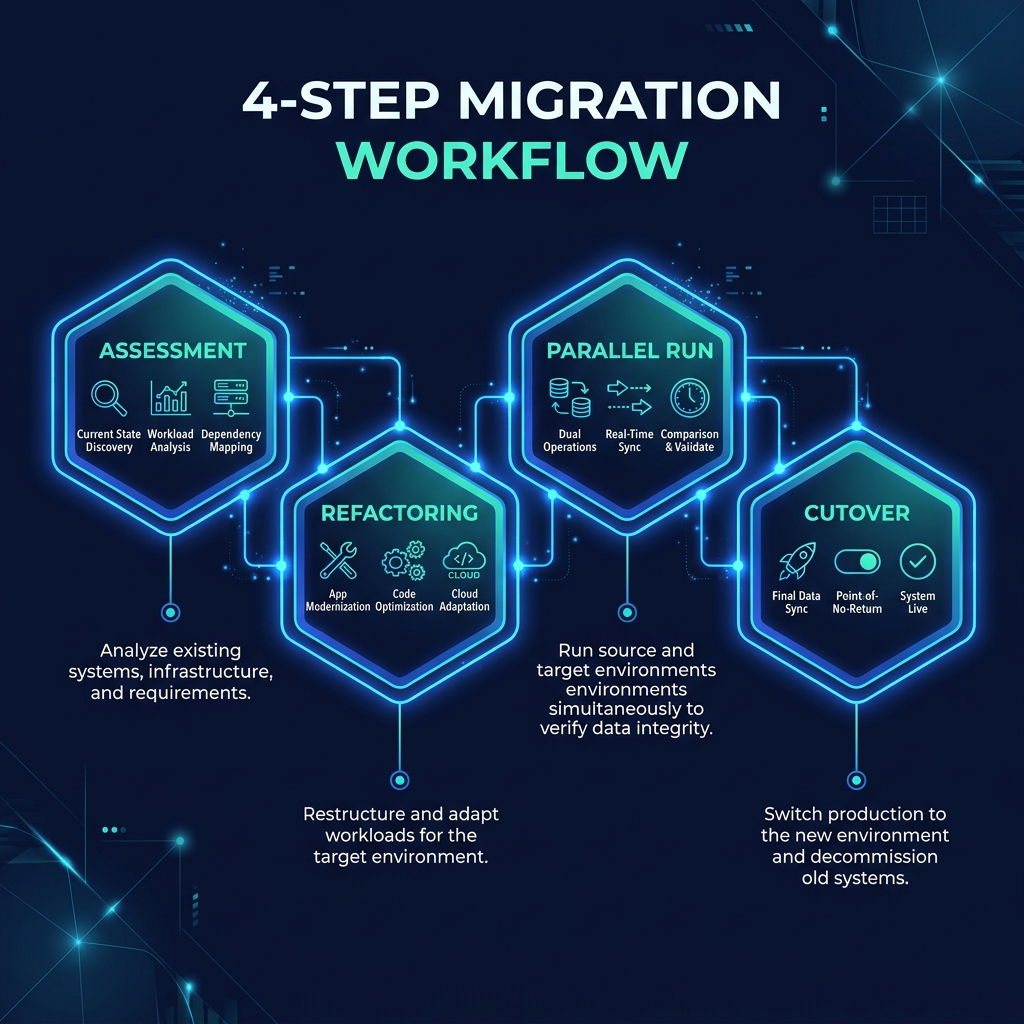
Delta Lake implementation process displaying ACID transactions and time travel features

1. Discovery

We understand data sources, volumes, velocity, and analytics goals.

2. Assessment

We audit existing data systems, identifying code inefficiencies and security risks.

3. Architecture

Certified architects design network security, storage, and compute configurations.

4. Engineering Design

We map out data models, ETL/ELT pipelines, and stream logic rules.

5. Development

Engineers construct pipelines, write Spark/SQL models, using CI/CD practices.

6. Testing

We run query stress testing, data validation, and pipeline dependency checks.

7. Deployment

We deploy infrastructures via Terraform templates directly into your cloud tenant.

8. Monitoring

Enable telemetry tracking, failure logging, and real-time email/Slack notifications.

9. Optimization

Adjust workloads post go-live to downsize clusters and cut cloud usage bills.

10. Managed Support

Act as an extension of your data team to manage updates, scaling, and integrations.

Why Choose Cyfradane

  • Specialized Data Engineering: We focus purely on data architecture, pipeline development, and server configurations.
  • Enterprise Experience: Deep experience with secure networks, complex databases, and compliance frameworks.
  • Lakehouse Architecture Experts: Pioneers in Delta Lake migrations and multi-cloud Lakehouse configurations.
  • Security-First Approach: VNet injection, Private Link setups, and central access catalog security are built-in.
  • Vendor-Neutral: Focus strictly on optimizing your business solutions, not hitting partner vendor sales quotas.

Business Benefits

  • Faster ETL Execution: Shift from hours of batch processes to instant stream results.
  • Reduced Operational Costs: Cluster optimization helps cut down expensive monthly cloud computing bills.
  • Better Data Governance: Easily track data lineage using centralized controls.
  • Reliable Data Pipelines: Fail-safe pipelines with auto-retry and schema check protections.
  • Sub-second Query Speeds: Highly optimized tables that let analytical BI tools pull data instantly.

Frequently Asked Questions

Find answers to common questions about our Databricks Data Engineering consulting services.

1. Why use Databricks specifically for Data Engineering?
Databricks offers a unified environment powered by Apache Spark, which provides unparalleled distributed computing power for processing large-scale datasets. It allows data engineers to write code in Python, Scala, or SQL, orchestrate complex pipelines natively, and ensure data reliability through Delta Lake, making it the most robust platform for enterprise data engineering.
2. What is Lakehouse Architecture?
A Lakehouse architecture combines the flexibility, machine learning support, and low-cost storage of a data lake with the data management, ACID transactions, and structural performance of a traditional data warehouse. It allows organizations to maintain a single tier for all their data needs.
3. What is Delta Lake?
Delta Lake is an open-source storage layer that sits on top of your existing data lake (like Azure Data Lake Storage or AWS S3). It brings reliability to data lakes by enabling ACID transactions, scalable metadata handling, and unified streaming and batch data processing.
4. What is Apache Spark?
Apache Spark is a powerful, open-source distributed unified analytics engine used for large-scale data processing and data engineering. Databricks was founded by the original creators of Apache Spark and offers the most optimized, fully-managed version of the Spark engine available today.
5. Can Databricks replace our legacy ETL tools?
Yes. Databricks can entirely replace rigid legacy ETL platforms like Informatica or SSIS. By using Databricks Workflows and Delta Live Tables, we can build highly flexible, code-based pipelines that perform complex transformations faster and at a lower cost.
6. Can Databricks integrate with Microsoft Fabric?
Absolutely. Cyfradane specializes in hybrid modern data platforms. We can architect solutions where Databricks acts as the heavy-duty data engineering and transformation engine, seamlessly feeding curated Delta tables into Microsoft Fabric for downstream reporting and analytics.
7. Can Databricks integrate with Azure Data Factory (ADF)?
Yes, ADF and Azure Databricks work seamlessly together. ADF is frequently used as an orchestration and ingestion tool to move data into the cloud, triggering Databricks notebooks to perform the heavy lifting of data transformation using Apache Spark.
8. How long does a Databricks implementation take?
Implementation timelines vary based on the complexity and volume of the data estate. A foundational architecture and initial pipeline deployment can take 4-8 weeks, while large-scale legacy enterprise migrations may take several months. Cyfradane provides precise timelines during our initial architecture assessment.
9. Do you provide legacy data migration services?
Yes. We specialize in migrating data, schemas, and historical ETL workloads from legacy on-premises systems (Hadoop, Oracle, SQL Server, Netezza) and legacy cloud data warehouses into the Databricks Lakehouse.
10. Do you optimize existing Databricks costs?
Yes. Many organizations overspend due to inefficient cluster configurations or poorly written Spark code. Our engineers conduct thorough cost optimization audits, right-sizing clusters, implementing auto-termination, and rewriting expensive queries to maximize your ROI.
11. Do you provide managed Data Engineering services?
Yes, Cyfradane offers comprehensive managed services. Our engineering team acts as an extension of your IT department, proactively monitoring pipeline health, managing Databricks updates, resolving failures, and providing ongoing architectural enhancements.
12. Is Databricks highly secure for enterprise financial and healthcare data?
Databricks meets strict enterprise compliance standards (HIPAA, SOC2, etc.). Through features like Unity Catalog, customer-managed keys (CMK), private link networking, and strict RBAC, we engineer environments that ensure total data privacy and security.
13. What languages do your data engineers use in Databricks?
Our data engineers are highly proficient in Python (PySpark), Scala, and SQL, selecting the most appropriate and performant language based on the specific transformation requirement and your internal team's capabilities.
14. How does Databricks handle real-time streaming?
Databricks utilizes Spark Structured Streaming and Delta Live Tables to ingest and process data continuously from message buses like Apache Kafka or Azure Event Hubs, allowing for real-time data transformations without needing a separate architecture stack.
15. What is Databricks Unity Catalog?
Unity Catalog is the centralized governance solution for all data and AI assets within the Databricks Lakehouse. It allows our engineers to define data access policies, audit logs, and track data lineage across all your workspaces securely.
16. Does Databricks work across multiple clouds?
Yes. Databricks is fundamentally cloud-agnostic, running natively on Azure, AWS, and Google Cloud. This multi-cloud capability prevents vendor lock-in and allows enterprises to unify data governance regardless of where the underlying data physically resides.
17. How do you handle pipeline orchestration in Databricks?
We utilize Databricks Workflows for native, highly reliable job orchestration. For organizations with complex external dependencies, we also heavily integrate Databricks with Apache Airflow to manage the execution of end-to-end data pipelines.
18. What is the difference between Databricks Data Engineering and Databricks SQL?
Data Engineering involves building the pipelines and infrastructure (via notebooks, PySpark, and Delta Lake) that extract and transform the raw data. Databricks SQL is the serving layer—a highly optimized compute engine that allows analysts to query that engineered data using standard SQL and BI tools.
Knowledge Hub

Related Technical Insights & Guides

Databricks Lakehouse Architecture: The Complete Guide (2026)

Detailed breakdown of reference architectures, Unity Catalog governance, Liquid Clustering, and Medallion design.

Read Guide

Databricks Lakehouse Implementation: Step-by-Step Guide

A 10-phase technical playbook for implementing Databricks in the enterprise using DABs and IaC.

Read Guide

Stop letting infrastructure bottlenecks delay your analytics.

Transform your enterprise data architecture with Cyfradane’s specialized Databricks data engineering consultants. We architect, build, and optimize the resilient data pipelines and scalable Lakehouse environments required to future-proof your organization.

Schedule Your Data Engineering Consultation Today