Stop overpaying for compute. We identify waste, configure execution guardrails, and restructure workloads to slash your Databricks bills by 25�50% within 90 days.
Databricks bills climb because teams run production pipelines on interactive compute, leave clusters running idle, and never build visibility into where DBUs actually go. Organizations that implement a structured cost audit typically see 25�50% reductions in total Databricks spend within 90 days. Cyfra Dane runs that audit for you � diagnosing the specific inefficiencies in your workspace rather than handing you a generic checklist.
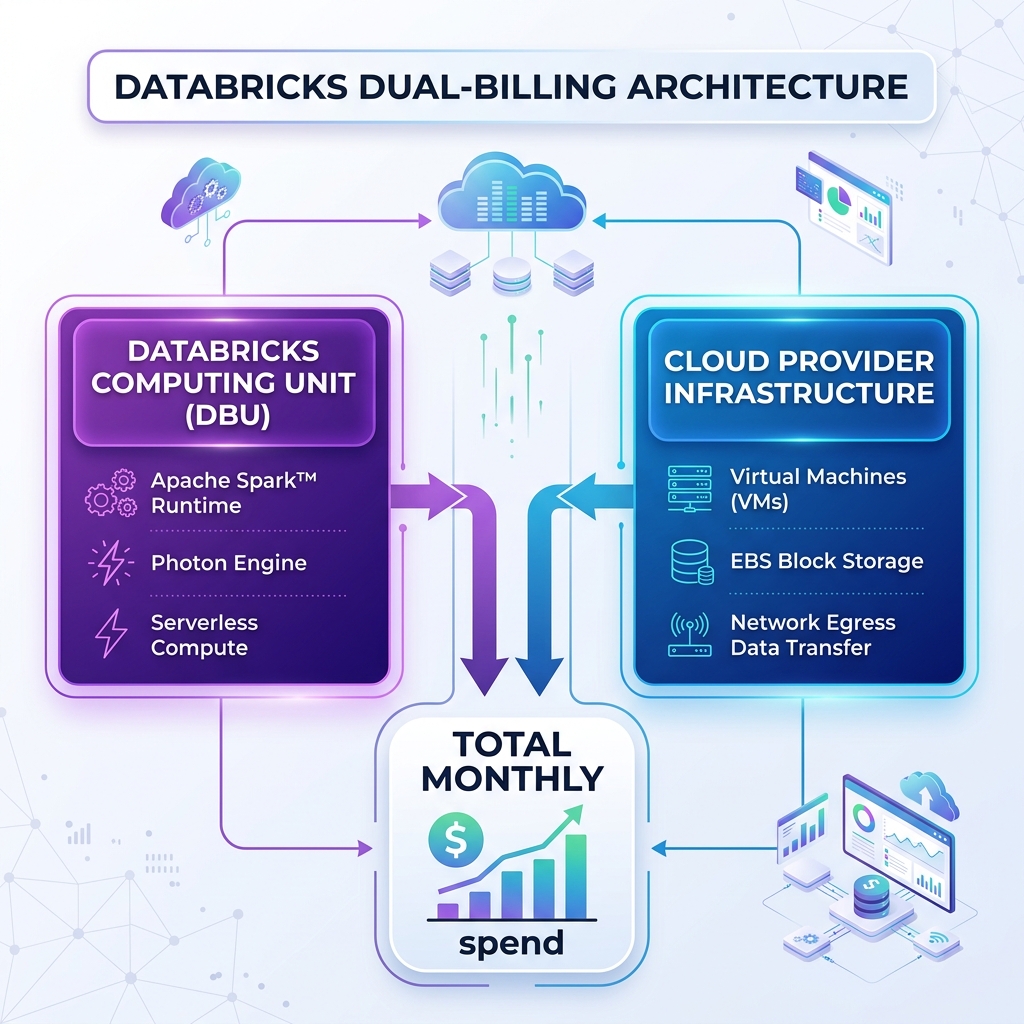
Databricks charges on two separate bills: software fees measured in Databricks Units (DBUs) billed per second based on compute settings, and cloud infrastructure fees for the VMs, storage, and egress data.
Note: DBU rates can vary by region and customer tier. Verify current rates via the official Databricks pricing calculator before finalizing budgets.
| Compute Type | Standard Tier | Premium Tier |
|---|---|---|
| Jobs Compute | $0.07�$0.15/DBU | $0.15�$0.30/DBU |
| All-Purpose Compute | ~$0.40/DBU | $0.55�$0.65/DBU |
| SQL Warehouse (Classic) | ~$0.22/DBU | $0.22�$0.55/DBU |
| Serverless SQL | N/A | $0.70�$1.40/DBU (includes VM costs; Azure Enterprise SKUs at high end) |
All-Purpose rates converge tightly across providers (~$0.40/DBU), making workload placement (Jobs vs All-Purpose) the single largest savings lever.
| Cloud Provider | Approximate DBU Rate |
|---|---|
| Amazon Web Services (AWS) | ~$0.07�$0.10/DBU |
| Google Cloud Platform (GCP) | ~$0.10/DBU |
| Microsoft Azure | ~$0.15/DBU |
Organizations committing $1M�$3M annually typically secure 18�28% off list DBU prices, while $10M+ commits receive 35�48% discounts. Azure customers utilizing 3-year Databricks Commit Units (DBCUs) can realize up to 37% savings over standard pay-as-you-go pricing (Source: enterprise contract benchmark, 160+ agreements analyzed, Nov 2025).
We apply a systematic 4-phase framework to locate inefficiencies and permanently lock in DBU savings.
We query system.billing.usage in Unity Catalog to establish an accurate spend baseline, identifying top cost contributors by workspace, cluster, and user.
We audit cluster metrics and telemetry data to diagnose inefficiencies: misclassified compute, oversized clusters, spill-to-disk overheads, and storage layout fragmentation.
We execute quick wins first (auto-termination bounds, compute correction) before implementing structural database changes (Spark tuning, Delta clustering, policies).
Immediate configurations are active in weeks 1�2; deep architectural optimizations deliver maximum, compounding ROI within a 90-day window.
We focus on deep configuration optimizations that directly lower active cluster runtimes and DBUs.
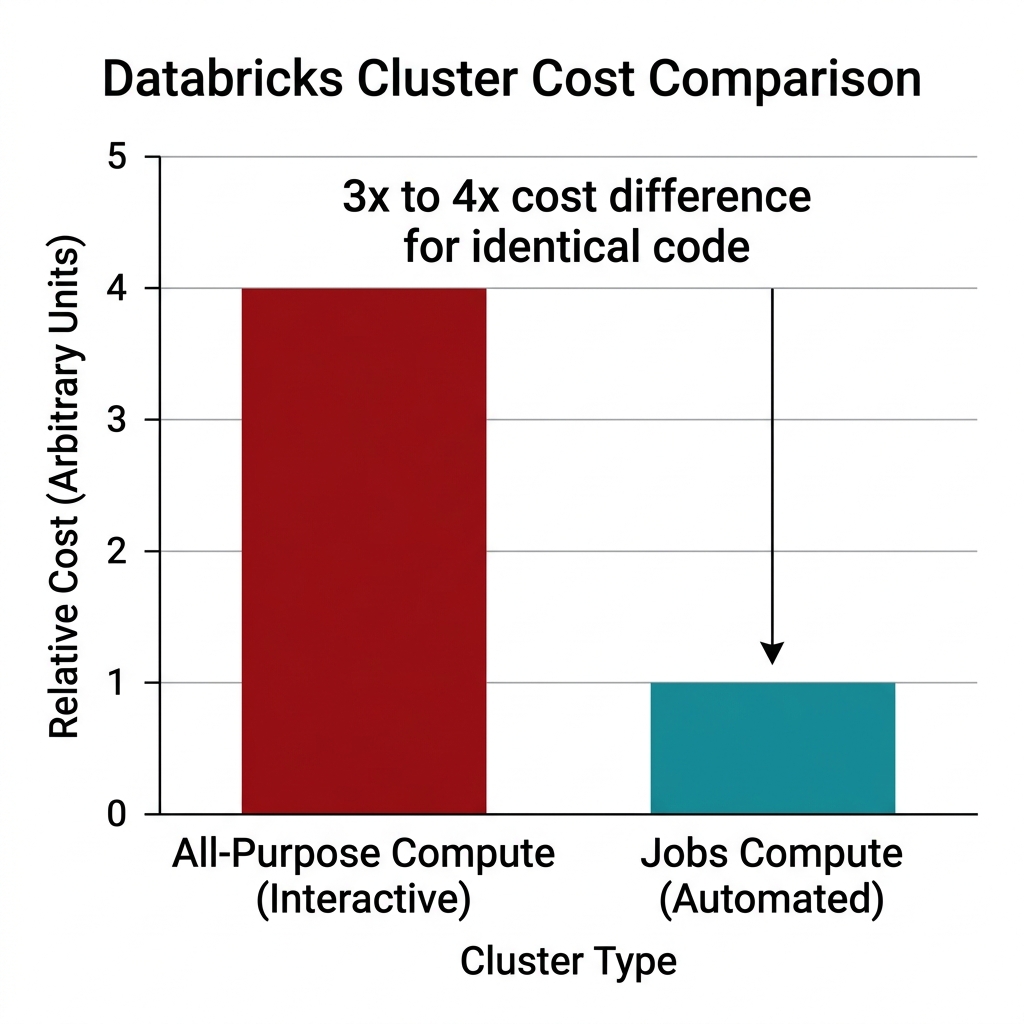
Running scheduled batch pipelines on All-Purpose clusters instead of Job clusters typically costs 3�4x more for identical work. This is the fastest, highest-impact configuration fix.
We enforce a 10�15 minute idle termination threshold on interactive workspaces and 30�60 minutes on developer sandboxes to prevent run-away weekend charges.
For fault-tolerant pipelines, we configure spot and preemptible VMs. This cuts the cloud provider's compute cost by 30�90%, keeping only driver nodes on-demand for stability.
We match instance families to actual workload profiles (compute vs memory-optimized) using system table telemetry, upgrading clusters running consistently below 50% capacity.
Photon carries a 40�100% DBU premium. We audit and enable it for large SQL aggregations and heavy ETL transforms, and disable it for Python-UDF-heavy runs where the runtime doesn't justify the cost.
We schedule routine OPTIMIZE and VACUUM scripts to compact small files and purge stale history. For new tables, we leverage liquid clustering to handle skew dynamically.
For workloads with predictable, consistent execution paths, the overhead of constant cluster resizing and executor rebalancing can add latency. In these specific cases, a fixed-size cluster paired with aggressive auto-termination can outperform autoscaling on both speed and overall cost. We test this per workload rather than applying autoscaling as a blanket default.
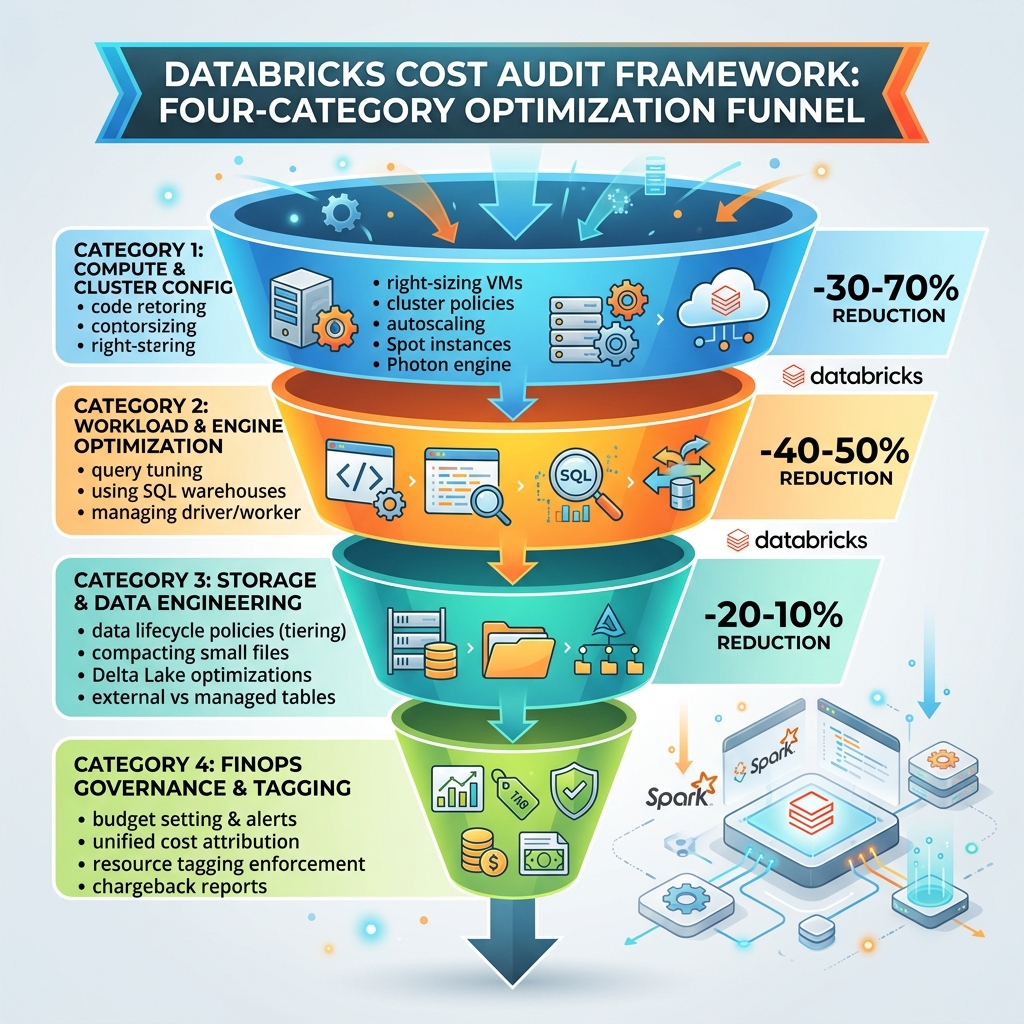
Unchecked cluster creation guarantees overspend. We implement cluster policies using standardized size profiles to stop users from launching oversized, costly compute nodes for routine querying.
We mandate cost-center and project tags on every cluster, joining this tagging metadata with system.billing.usage to construct automated chargeback reports. This maps DBU consumption directly to specific business units and engineering initiatives.
This integrates directly with our Unity Catalog governance work. Workspace overspend and loose security shares the same root cause: lack of a clear, central ownership model. By implementing central policies, we fix both.
Microsoft Azure has announced the final retirement dates for the Databricks Standard pricing tier:
The practical takeaway: The DBU rate increase is coming regardless of your actions. The choice is whether to right-size and consolidate your workspaces before the transition, or absorb an unoptimized 35%+ infrastructure cost spike. Auditing now guarantees you optimize your compute workloads under lower Standard pricing.
Our optimizations deliver direct, measurable reductions to monthly subscription and compute bills.
An independent financial services organization faced soaring monthly compute costs caused by scheduled ingestion jobs running on interactive clusters.
Data compiled across enterprise workspaces highlight the potential of optimization and structured licensing:
We align our delivery structure with your organization's internal resources and specific targets.
Detailed analysis of DBU consumption and source telemetry with a prioritised savings roadmap.
We run the audit, construct policies, adjust cluster configurations, and tune Spark code for you.
Continuous DBU tracking, workspace governance, alert monitoring, and monthly check-ins.
Find answers to common questions about our Databricks Cost Optimization consulting.
system.billing.usage and system.compute.clusters) via Unity Catalog. We do not require write permissions or access to your underlying business data.
Partner with Cyfra Dane to deploy automated cluster policies, tune Spark executions, and enforce workspace controls. We reduce base infrastructure overheads so you pay only for the compute you actually need.
Schedule a Cost Assessment Today