Cyfra Dane is an independent Databricks and multi-cloud data engineering specialist. We modernize legacy Hadoop and warehouse estates, implement governed Lakehouse architecture with Unity Catalog, and prepare Fintech and Healthcare data platforms for production AI.
Databricks consulting · Delta Lake & Unity Catalog governance · Data pipeline development · Data migration · Microsoft Fabric consulting
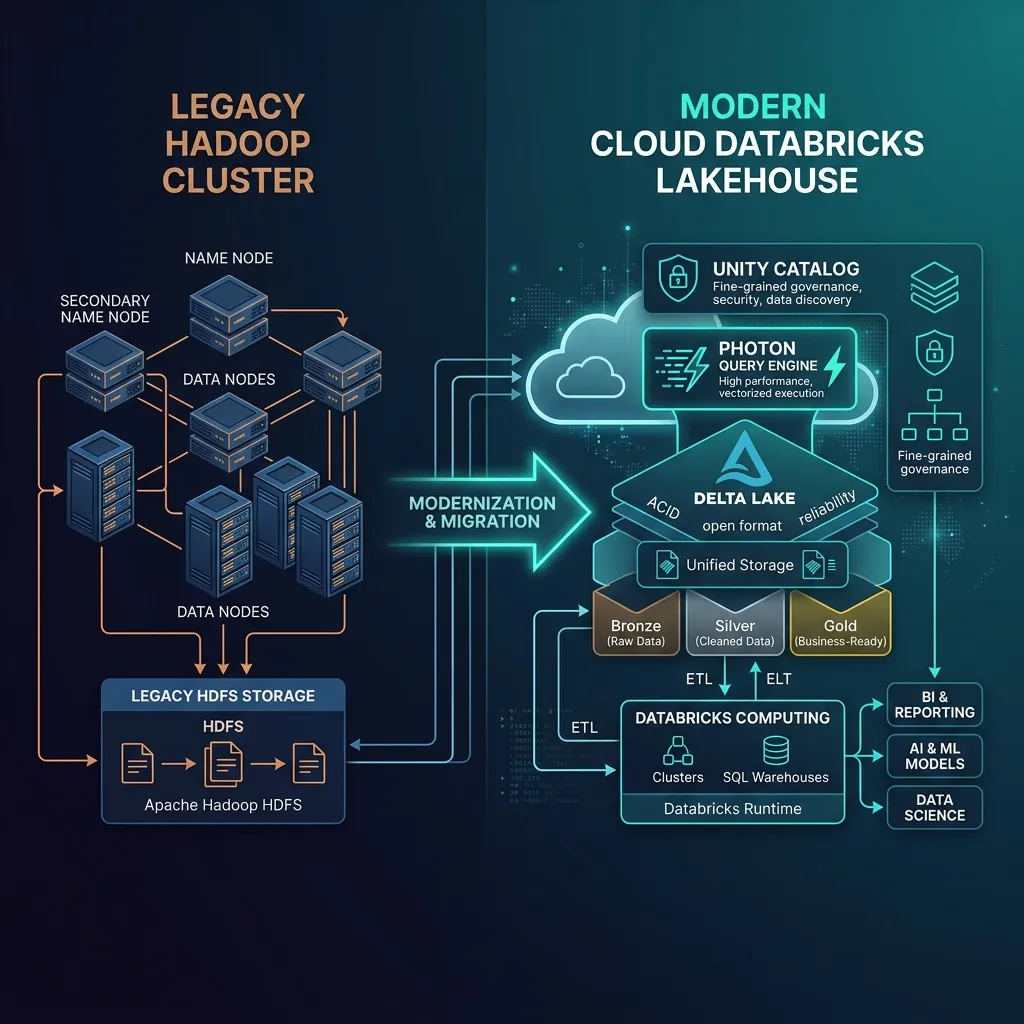
Enterprises in regulated industries are running fragmented, high-cost legacy data estates—Hadoop clusters, siloed warehouses, ungoverned pipelines—while being asked to deliver production AI on top of them. The gap between "we have data" and "we can safely run AI on that data" is now the primary blocker to enterprise AI adoption.
Most consultancies solve half the problem: they either migrate the platform or bolt on AI tooling, but rarely govern both under one operating model. That gap shows up as:
Legacy Hadoop and on-prem clusters are expensive to run, complex to manage, and hard to staff.
Data governance that covers tables and dashboards, but leaves models, agents, and AI tools exposed.
Cloud spend that grows exponentially faster than the business value the platform produces.
Cyfra Dane delivers Databricks and Microsoft Fabric consulting, data engineering, migration, governance, and AI enablement as one connected engagement—not disconnected line items.
Architecture, implementation, and optimization of the Databricks Lakehouse platform—Delta Lake, Unity Catalog, workflows, and AI/ML tooling.
End-to-end implementation of Microsoft Fabric, including OneLake, Fabric Data Factory, Fabric Lakehouse/Warehouse, and Real-Time Intelligence.
Building and operating the pipelines, models, and infrastructure that move data reliably from source systems into governed, analytics-ready platforms.
Structured review and re-architecture of cloud and Databricks spend to reduce cost without reducing platform performance.
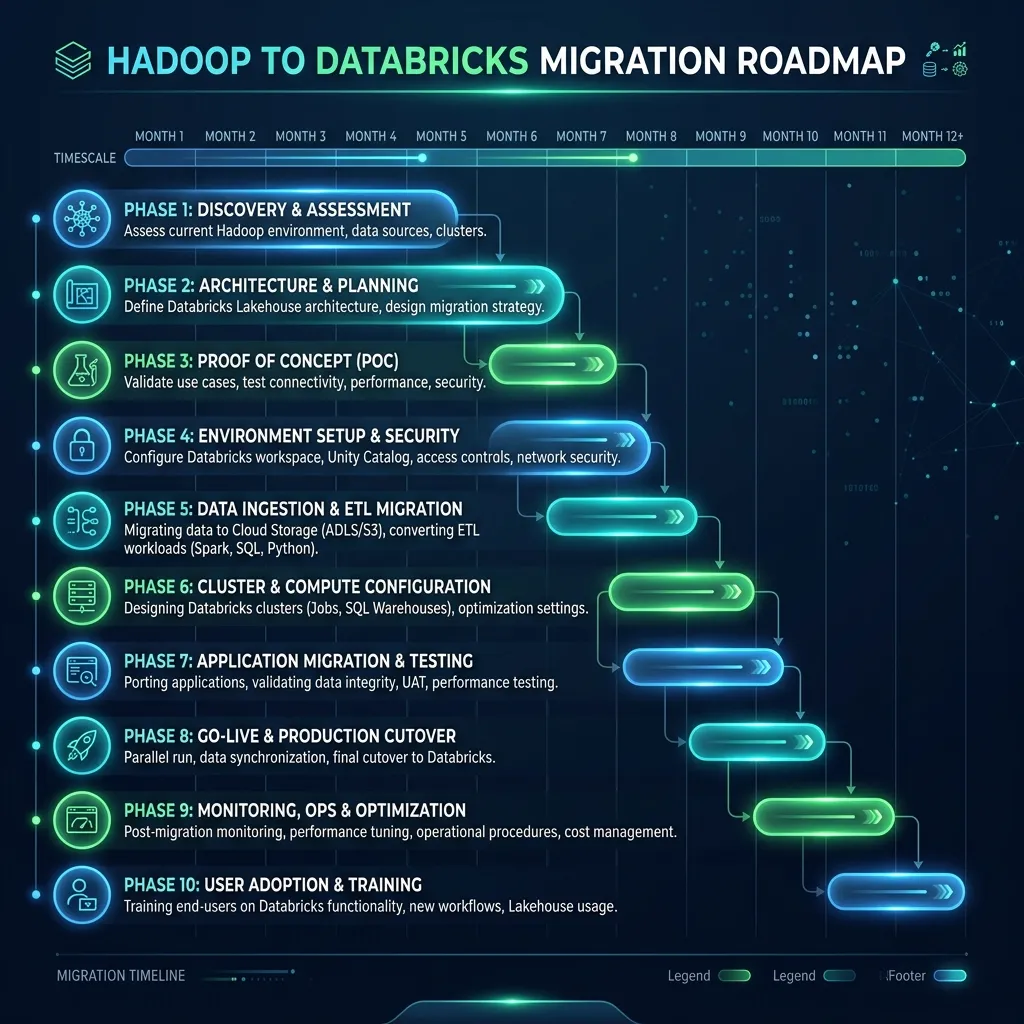
Structured, risk-managed migration from legacy Hadoop, on-prem warehouses, or Synapse/ADF estates onto a modern Lakehouse or Fabric platform.
Preparing data platforms and teams to run production AI—including retrieval-augmented generation (RAG), vector search, and agentic workflows—on governed data.
Cyfra Dane is an independent Databricks and multi-cloud specialist—not a reseller with a partner quota to hit—focused specifically on Fintech and Healthcare, where governance and compliance requirements shape every architecture decision.
We have no partner quotas or reseller incentives. Our advice is shaped purely by your architecture and compliance requirements.
Deep expertise navigating the strict security, auditability, and compliance standards within Fintech and Healthcare.
We focus heavily on corporate training and upskilling so that your internal team can operate the platform independently post-delivery.
Cyfra Dane delivers through a structured six-stage methodology so that migration, governance, and AI readiness are planned together instead of bolted on afterward.
Assess current architecture, data assets, compliance scope, and primary business goals.
Design the target Lakehouse or Fabric architecture, including migration wave sequencing.
Build pipelines, data models, platform integrations, and semantic structures against target design.
Implement Unity Catalog (or Fabric equivalent) governance across data, models, and AI tools.
Tune system performance, minimize compute cost, and establish FinOps and monitoring rules.
Deliver technical and executive training to hand over operational ownership to your team.
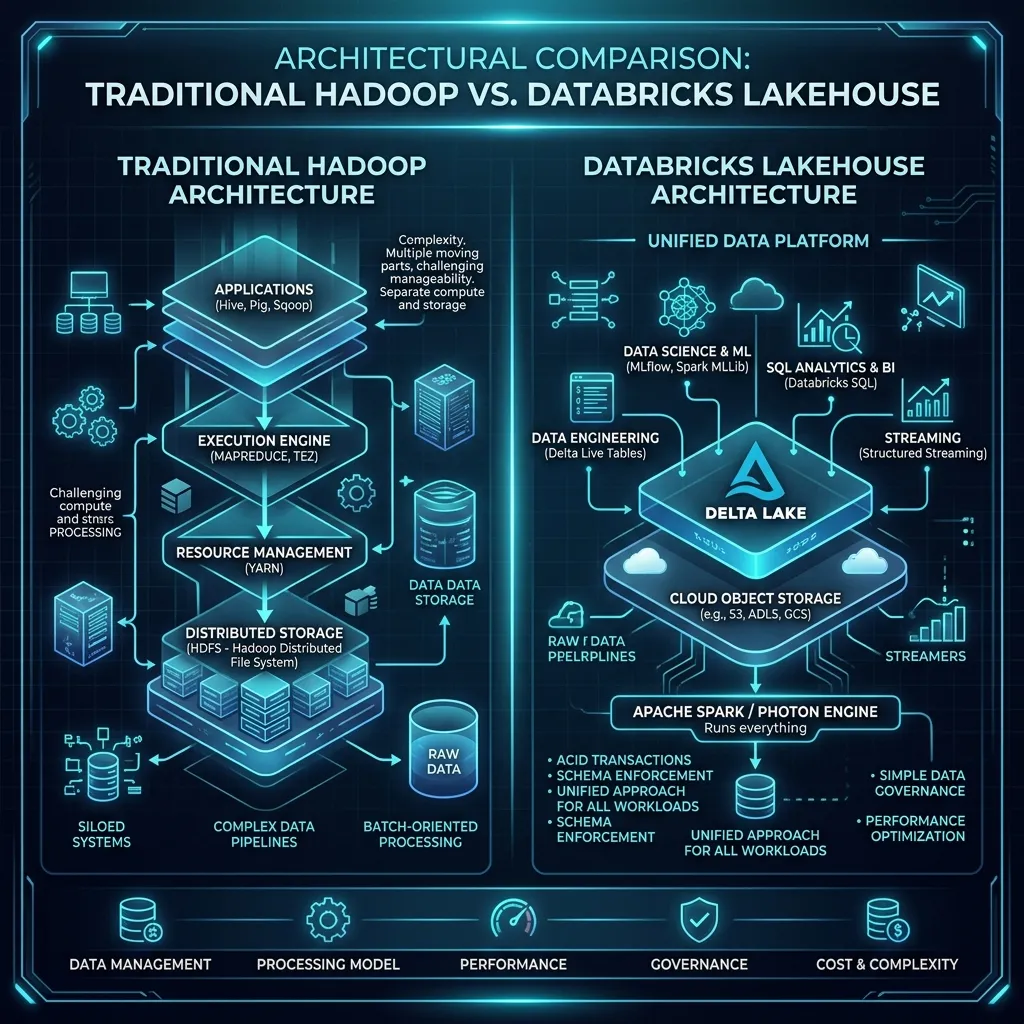
Cyfra Dane works across the Databricks Lakehouse platform and Microsoft Fabric, helping enterprises decide between them—or run both—based on architectural fit rather than vendor preference.
| Consideration | Databricks-First | Fabric-First |
|---|---|---|
| Best fit | Multi-cloud, open lakehouse, heavy ML/AI workloads | Unified SaaS, Power BI centric, Azure standard |
| Governance | Unity Catalog (data, models, agents, tools) | Microsoft Purview & Fabric governance |
| AI/ML Depth | Strong native MLOps, Mosaic AI | Azure AI Foundry integration |
| Migration | Hadoop / Synapse / ADF → Databricks | ADF / Synapse → Fabric Data Factory |
We focus strictly on sectors where data lineage, audit capabilities, and high security are mandatory architecture components.
Governed data pipelines for risk management, fraud detection, and transactional reporting. We build audit-ready data lineages and establish automated cost controls for compute-heavy analytic workloads.
Explore Fintech CapabilityCompliant, secure data lakes designed to store and catalog clinical, operational, and patient datasets. We implement governance structures built around strict data security regulations and secure AI pipeline boundaries.
Explore Healthcare CapabilityWe anchor all architectural engagements around solid milestones, focusing on reduction of technical debt, compute efficiencies, and complete team independence.
Significant reductions in platform overhead by migrating away from legacy, high-maintenance Hadoop clusters.
Consolidated Lakehouse structure providing rapid access to data, accelerating dashboard performance.
Continuous cost audits, auto-termination configurations, and cluster right-sizing to optimize cloud spend.
Custom bootcamps and playbooks to ensure internal engineering teams run the platform without external aid.
We enforce a wave-based migration strategy, running old and new platforms in parallel until thorough validation rules are completely satisfied.
Governance is treated as a core architectural building block, not a checkbox. We implement unified control planes that secure both analytics layers and the downstream AI components utilizing your datasets.
| Metric Category | How We Track & Validate | Primary Objective |
|---|---|---|
| Cost Efficiency | Cloud and DBU spend tracking before versus after workload right-sizing. | Unlocking immediate cost reduction. |
| Delivery Adherence | Tracking actual pipeline migrations against target wave milestones. | Zero business downtime during migration. |
| Governance Coverage | Verifying the percentage of data tables governed via automated Unity Catalog lineage. | 100% catalog coverage for sensitive data. |
| Team Autonomy | Assessing internal team capability to build and modify pipelines without external aid. | Full handover with no vendor lock-in. |
Whether you're planning a Hadoop migration, evaluating Databricks vs. Microsoft Fabric, or preparing your platform to run production AI safely, Cyfra Dane can map the roadmap with you.