Published on July 28, 2026 | Written by Mr. Shifa ur rehman jamali
Technical Deep-Dive
A Databricks Lakehouse pipeline moves data through three progressively refined layers — Bronze (raw), Silver (cleaned and conformed), and Gold (business-ready) — orchestrated declaratively through Delta Live Tables rather than hand-written Spark scripts. Getting this right in 2026 means choosing correctly between Streaming Tables and Materialized Views, since that single decision determines whether your pipeline costs scale predictably or spike unexpectedly. This guide covers the architecture, the ingestion layer, and the FinOps trade-offs most tutorials skip entirely.
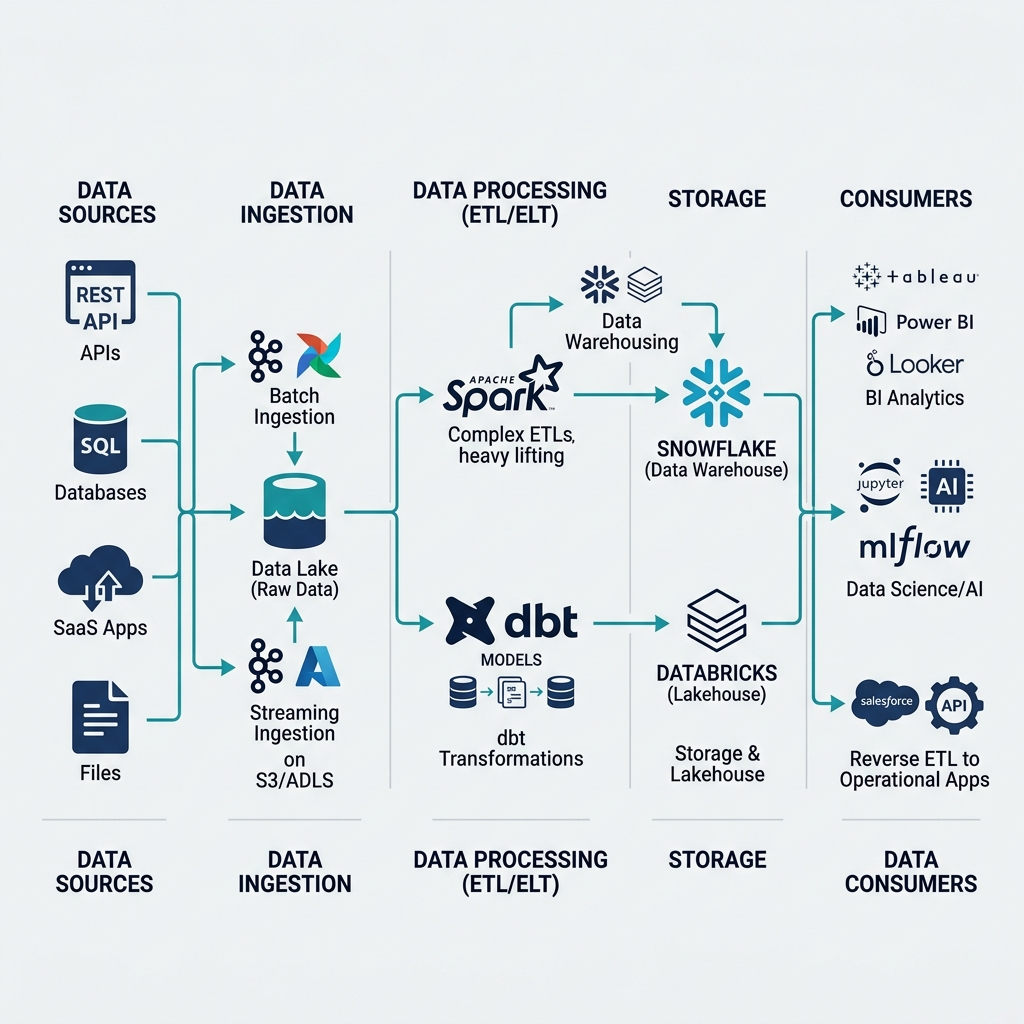
Bronze holds raw, untouched ingestion data exactly as it arrived; Silver applies cleaning, deduplication, and conformance logic; Gold produces business-level aggregations and star schemas ready for BI tools. This progressive refinement pattern exists so that data quality problems get caught and corrected at the earliest possible stage, rather than surfacing downstream in a dashboard that a business stakeholder is actively looking at.
The practical discipline this requires: Silver should only ever read from Bronze, and Gold should only ever read from Silver — skipping layers to "save time" is how lineage becomes untraceable and debugging becomes guesswork.
Auto Loader incrementally and efficiently processes new files as they land in cloud storage, handling both structured and semi-structured sources — including raw JSON and XML streams — without needing a separate ingestion tool. The standard pattern is to ingest JSON/XML as raw strings directly into Bronze, then parse and structure them only once they move into Silver, preserving the original raw payload in case a downstream parsing bug needs to be replayed against the source data.
For streaming sources like Kafka or Azure Event Hubs, Structured Streaming handles continuous ingestion natively, meaning the same pipeline framework covers both batch and streaming data without a separate architecture stack for each.
Delta Live Tables (DLT) is a declarative framework for building and orchestrating pipelines, and it's currently transitioning into Lakeflow Spark Declarative Pipelines (SDP) — a change that will affect pipeline syntax going forward, so new pipeline builds should be designed with this transition in mind rather than built purely against legacy DLT patterns.
The core benefit of the declarative approach over hand-written Spark: DLT automatically handles lineage tracking, pipeline state, and data quality enforcement, which in a traditional Airflow-plus-Spark setup all require custom code that someone has to maintain indefinitely.
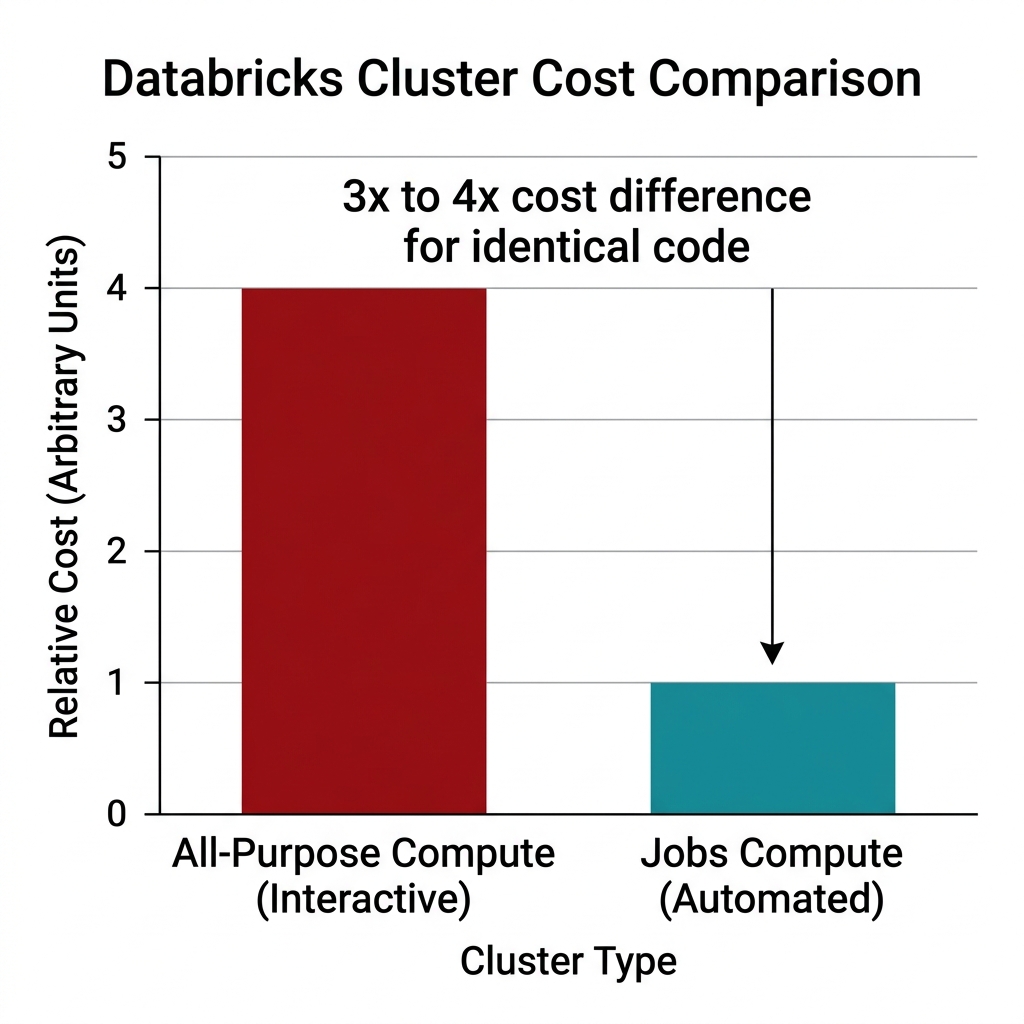
This is the single most consequential architecture decision in pipeline design, and it's the part most tutorials leave out. A Streaming Table (ST) processes data incrementally and append-only, making its cost linear and predictable. A Materialized View (MV) guarantees a fully consistent result but can trigger an expensive full recompute — particularly with complex, non-deterministic joins — making its cost far less predictable at scale.
The practical FinOps rule: default to Streaming Tables everywhere, and treat Materialized Views as a "luxury resource" reserved specifically for small, highly aggregated Gold-layer tables where the guarantee of full consistency is worth the recompute risk.
| Pattern | Cost profile | Best used for |
|---|---|---|
| Streaming Table (ST) | Linear, predictable, incremental | Bronze and Silver layers; high-volume append-only data |
| Materialized View (MV) | Can spike on full recompute | Small, highly aggregated Gold tables only |
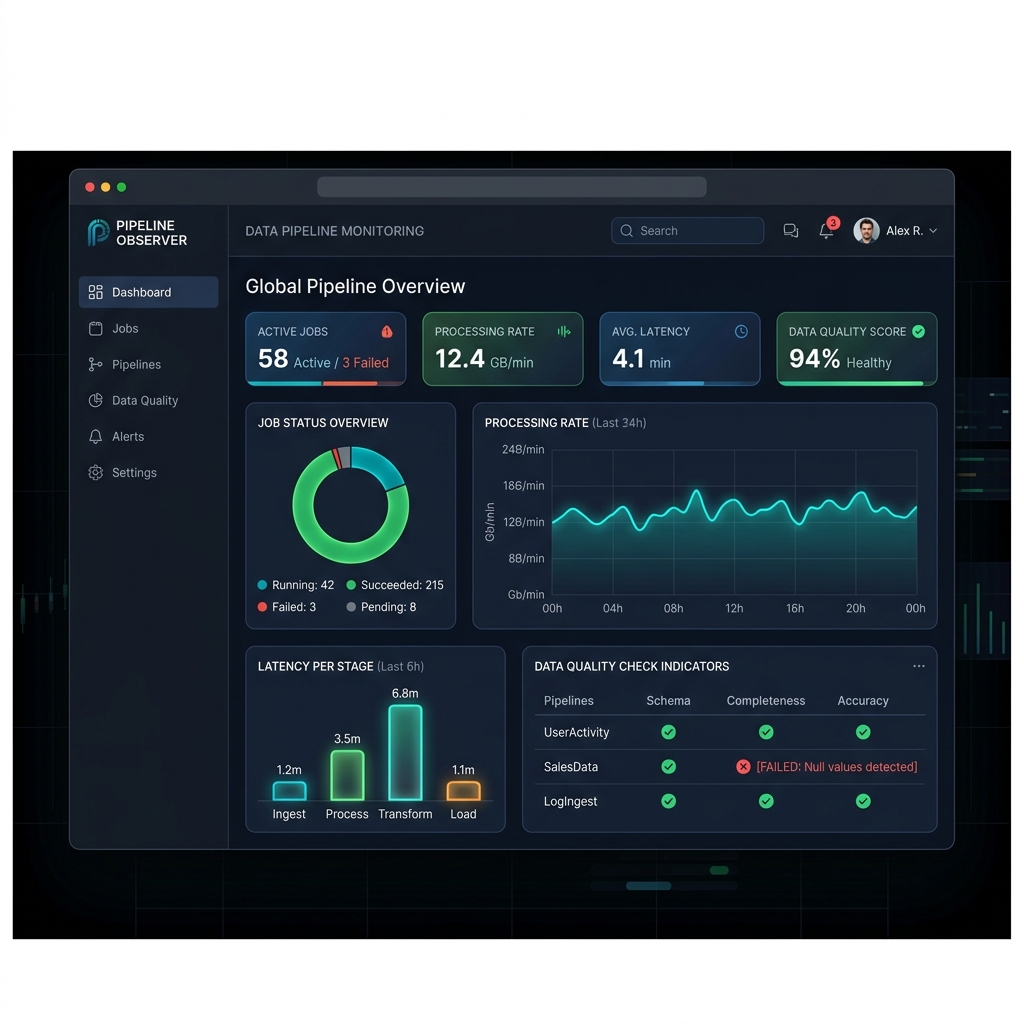
DLT Expectations let you define data quality rules directly in the pipeline using three modes: EXPECT, EXPECT OR DROP, and EXPECT OR FAIL. The critical guidance here is to avoid EXPECT OR FAIL on Bronze ingestion specifically — since you can't control what an external vendor sends you, a single malformed record shouldn't be able to halt your entire ingestion pipeline.
The recommended pattern instead is the Quarantine pattern: route bad records to a dedicated error table rather than dropping them silently or failing the whole job. This preserves the bad data for investigation while letting clean records continue flowing through to Silver and Gold uninterrupted. As one practitioner puts it plainly: you cannot control external vendors, so don't let their mistakes stop your processing — capture, don't drop.
Liquid Clustering should be applied within DLT pipelines just as it would be anywhere else in the Lakehouse — it replaces manual partitioning and prevents write conflicts on tables receiving concurrent updates, which is a common scenario in Silver-layer conformance jobs handling multiple simultaneous source feeds.
A Streaming Table processes data incrementally with linear, predictable costs, while a Materialized View guarantees a fully consistent result but risks expensive full recomputes — especially with complex joins — making it a costlier option at scale.
No. Since external vendor data quality is outside your control, use the Quarantine pattern instead — route bad records to a dedicated error table so one malformed row doesn't halt the entire pipeline.
Yes. DLT unifies streaming and batch processing within the same declarative pipeline DAG, so you don't need separate architectures for real-time and scheduled data.
No, DLT is a Databricks-specific framework — you're trading portability for the operational speed it provides, which practitioners report as roughly 30-50% faster delivery than custom Airflow-plus-Spark setups.
Ingest it as a raw string directly into Bronze without parsing, then apply structure and parsing logic only in Silver — this preserves the original payload in case you need to replay a fix.
Lakeflow is the platform DLT is transitioning into, built around the open Spark Declarative Pipelines (SDP) standard — new pipelines should be designed with this shift in mind.
The pipelines that cause the most FinOps pain in production are almost always the ones where Materialized Views were used by default instead of as the exception. If you're designing new Lakehouse pipelines or auditing an existing DLT setup for cost risk, Cyfradane's data engineering team can review your Streaming Table vs. Materialized View allocation before it becomes an expensive surprise. For the governance side of pipeline design, see our guide on Databricks Lakehouse architecture, and for tuning Delta Lake performance once your pipelines are live, our Delta Lake optimization guide covers Liquid Clustering in more depth.
Download: The Databricks Lakehouse Pipeline Design Guide (PDF) — featuring the ST vs MV FinOps decision matrix and Quarantine pattern code templates.